The Sultans of Swing

Harry doesn’t mind if he doesn’t make the scene. He’s got a day time job; he’s doin’ alright…or maybe he’s stuck at home quarantined like so many of us. But hey, there’s always a bright side, right? Sheltering in place, staying at home, etc – it gives us a chance to be with our families and pets; and our records of course!

Working from home has given me the opportunity to finally do an A/B comparison that I’ve been drooling over since the original announcement that Mobile Fidelity was going to be releasing Dire Strait’s back catalogue in their 45rpm Gain 2 Ultra Analog series. It only took a few years for it to actually happen, and a few extra months for me to realize these had started shipping to actually grab one! Part of the reason I’ve been wanting to do this comparison and review is because of the history of great sound from Dire Straits. Mark Knopfler was/is known as a stickler for sound quality, and his playing style (he reportedly never uses a pick, preferring to use only his finger/fingernail/thumb to pluck to achieve maximum control over tone) is just so conducive to great recordings. Obviously it also helps that I like the songs and music he makes, but even if it isn’t your bag, I have to imagine most audiophiles could appreciate good, clean, sound regardless of their genre preferences.

For the last decade, my go-to copy of the Knopfler-led band’s debut/self-titled album has been the 2009 Bernie Grundman cut. It’s a pressing that constantly makes my list of “top sounding, affordable, albums” – it can still easily be had for $25 or less. Grundman, one of the best mastering engineers in the game, did his usual wonders with this one. It was sourced and cut from the original analog tapes (you can not go wrong with a Grundman AAA title), and was pressed at Pallas (which at the time was my #1 favorite plant, and still is #2 or #3 behind QRP and maybe RTI).

So, while I’ve been eagerly awaiting the MoFi pressings, I haven’t been terribly upset with sticking to my ’09 cuts. However, that calm and patience quickly faded when I was finally able to pull the trigger and order the full set of the Dire Straits MoFi titles – I couldn’t wait for the mailman to show up with my way-too-heavy package from MoFi’s parent, Music Direct. I ripped that thing open like a 5 year old on Christmas desperately grabbing for a new set of Legos, and the first thing I did was to move my table’s belt to the 45rpm setting and spun the Self-Titled album through maybe 3 or 4 times straight, without breaks or switching to something else. I was absolutely FLOORED by the sound quality. It probably would have been a good time to do a shootout between the two copies then. But, nope, I was greedy with my ears and so I had to wait until a literal pandemic forced my attention back to the task I was aiming to accomplish for years. Whoops.

Anyways, I’ve finally had time to A/B this, so I made sure to tune up all of my equipment – I cleaned my plinth, rebalanced my tone-arm, cleaned the stylus (highly recommend the OnZow ZeroDust), and cleaned both records. The equipment used is as follows:

  • Turntable – Pro-Ject Debut Carbon w/ Acrylic Platter
  • Cartridge/Stylus – MoFi Electronics UltraTracker; nude elliptical stylus
  • Phono Preamp – Parasound PPH100
  • Receiver/Amp – Marantz SR7000 (using Direct mode for analog inputs)
  • Speakers – Klipsch KG4
https://i.imgur.com/i0Avhcz.jpg

I decided that I would focus on comparing 2 tracks between the records; first being the well-known and timeless ‘Sultans of Swing’ and the second being the opening track ‘Down to the Waterline’. I chose these because on each copy, these tracks are the first of a single side (Sultans is B1 on the 2009, and C1 on the MoFi; Waterline is A1 on both). This helps in negating some of the potential distortion with tracks as you move closer to the runout (inner groove distortion or “IGD” is not really a problem on either of these copies, but in a shootout like this I wanted to hold all things constant as much as possible). The order of listening was: 1) Sultans (2009), 2) Sultans (MoFI), 3) Waterline (MoFi), 4) Waterline (2009). This order created a way to handle a first-impression bias, and made it a bit easier in changing speeds just 2 times.

I went into this knowing it would likely be a really tough competition. Yes, the MoFi has the added benefit of being cut at 45rpm; there are tangible benefits to that and they are audible. But the Grundman mastered release is just SO dynamic that I wasn’t sure how it could possibly be topped. Well…I found out pretty quickly. The 2009 pressing absolutely SMASHES from the first kick of Sultans, and the bass is incredibly detailed and full, but the MoFi pressing takes the highs to another level and brings out that incredible control over tone that Knopfler has with his guitar. It wasn’t so much that I was noticing new details – I feel like any hidden details that were previously hidden were revealed when I first spun the Grundman cut – but it was as if the final layer of a thin curtain between me and the band in the studio was finally (and suddenly) removed. The clarity was remarkable. Instrument separation was enhanced to the point of the imagining being scary-real. I played Waterline on the MoFi, and nearly got lost and let the next song – ‘Water of Love’, a great tune – play before I realized I had to switch. Going back to the 2009 cut wasn’t necessarily a “downgrade” as much as it was just hearing things with a slight filter on it. Not a bad filter, but a filtering that just left me feeling slightly unfulfilled after having such a revealing listening session.

All in all, the MoFi was the hands down winner, and I’m shocked to say that and that it was so abundantly clear. Now, that said, the MoFi isn’t going to be for everyone. If I had to nitpick, the 2009 cut has better bass and low end. It’s not a huge gap by any means, but it’s there. Ultimately, to me, I could do with a slightly diminished low end for what I gain in the mids and highs with the MoFi. I’ll also say that I had a VERY slight pre-echo on Sultans with the MoFi that I did not with the 2009 cut. Not a huge deal to me. But where this will be decided for most is the cost. As I noted before, the 2009 cut can be had for ~$25; whereas the MoFi lists at $50. That’s a huge price difference, and while I personally feel that the MoFi wins handedly, we’re working at margins that are already thin to even the most critical audiophile. So, use your judgement on this one. I’d assume this experience goes for the entire Dire Straits catalog, though I haven’t done the A/B’s yet for Making Movies, Communique, or Love over Gold. On Brothers in Arms (yeah, I still want my MTV and very 80’s-ish sounds) I’d actually recommend the Stan Ricker 2LP over the MoFi or Grundman; but that’s just personal preference. I don’t love that album much anyways. But for the rest, you have some great options, and can go with a more budget option with hifi sound or the premium version with even hifi-ier(?) sound. I love when there’s so many good options like that!

Anyways, thanks for reading my ranting and raving. Let me know if you have any questions about anything I wrote or anything you think I left out! Cheers, and stay healthy!

If You Get Confused, Listen to the Music Play

A week or two ago I posted about my complete Mobile Fidelity Sound Lab collection of Grateful Dead titles on Instagram & Reddit. I’m back with more Dead because, with the addition of MoFi’s Blues for Allah release, I was able to finally do an A/B comparison with my favorite Dead studio title – Blues for Allah. I’ve gone through many copies of this album over the years; from a 1975 US 1st pressing in VG- condition to the 2017 Rhino release that was initially only available in the Record Store Day box set.

2017 Record Store Day Box Set

I actually ended up sticking with the Rhino release because to my ears it sounded wonderful and the media condition on the 1st press was creating too much surface noise. I sold the original pressing and keep only the Rhino, but I was always looking for something compare it against. For the longest time I had my eyes set on the 2011 release from the now defunct Audio Fidelity label. Prices always seemed to be north of 3 figures and I never felt the need to spend that much, just for the sake of doing an A/B, as I was already really happy with the sound on the Rhino copy. That said, when Music Direct’s 2019 catalog came out and had a photo of Blues for Allah with the “Original Master Recording” on the jacket, I lost my shit! I called Music Direct that day and asked to pre-order. After roughly 1 year of waiting, it was finally released; and it sounded absolutely stunning. I was still curious how it stacked up against the Rhino, although I had my suspicions how this would end based on past similar comparisons I’ve done.

A complete collection of Mobile Fidelity Sound Lab’s Grateful Dead titles

Before I start comparing the two pressings, I wanted to share a bit about the album itself. Released in the early fall of 1975, Blues for Allah was the first studio release after the band had announced the then-indefinite hiatus from live touring. A small departure from their previous albums, where songs that had matured on the live stage were recorded for an album, “BfA” contained songs that were mostly written and developed in studio sessions in the early part of ’75. The album featured a mix of new genres and styles from lead guitarist Jerry Garcia, and marked the band’s most commercially successful album at the time; reaching as high as number 12 during a 3 month stint on the Billboard charts. The album was far more experimental than earlier albums like American Beauty and Workingman’s Dead (both which were based in the band’s late 60’s/early 70’s folk rock era), featuring elements of jazz and a slight dose of psychedelic rock. The album opens with a continuous flow of music from the segued Help on the Way -> Slipknot! 1st track, and seemingly morphs directly into the extremely catchy Franklin’s Tower. This is the first track that really gripped me on the album the first time I ever listened to it; with its repetitive refrain “roll away the dew”. The bouncing guitar riff featured throughout this tune was apparently inspired by Lou Reed’s Walk on the Wild Side, and once you know that you can’t unhear it! This opening segue makes for a perfect comparison track across the two pressings. What makes these perfect demo tracks to compare is that they will both start on the outer edge of the LP; chances of any IGD (inner groove distortion) will be limited – it won’t be something I have to adjust for in my analysis/rating. On both the Rhino and MFSL releases, these are tracks A1, A2, A3. Here are some details about each pressing below:

2017 Rhino Release

  • Pressed By: Record Industry
  • Masterd By: David Glasser
  • Release Notes: 1LP at 33 & 1/3rd; housed in single pocket jacket, inside generic poly innersleeve

2019 Mobile Fidelity Sound Lab Release

  • Pressed By: Record Technology, Inc. (RTI)
  • Mastered By: Krieg Wunderlich
  • Release Notes: 2LP at 45RPM as part of MoFi’s Gain 2 Ultra Analog series; limited to ~4,000

Before doing any listening, I took both albums to a local record store that has a an Audio Desk Systeme (a really expensive ultrasonic record cleaning machine) to have them cleaned. I put each into a new MoFi inner sleeve for safe and clean keeping. Then, before dropping the needle, I thorough cleaned the plinth to remove all dust, and used my Onzow ZeroDust to clean my stylus. My equipment used is as follows:

  • Turntable – Pro-Ject Debut Carbon w/ Acrylic Platter
  • Cartridge/Stylus – MoFi Electronics UltraTracker; nude elliptical stylus
  • Phono Preamp – Parasound PPH100
  • Receiver/Amp – Marantz SR7000 (using Direct mode for analog inputs)
  • Speakers – Klipsch KG4

As noted above, I was going to focus my testing first on the 3 segued tracks. The dueling elements between 2 electric guitars playing separate riffs, and a really funky baseline, make for a unique listening experience; but this is also where mastering is going to be hugely important. If properly mastered and fully dynamic, you should be able to separate each guitar and pull out the bass. If it is not, the guitars will sound muddy and will begin to bleed into one another.

I started with the MoFi (initially forgetting to put my speed to 45rpm, and wondering for that initial second why everything sounded odd), and I was first caught by how little surface noise there was on the lead-in track. Usually you expect some level of hiss or a pop, but there was none to be found. Kudos to RTI on that one! The song began and I felt the volume was slightly low, so I turned the receiver up 2 clicks. Jerry’s guitar with it’s signature envelope-filtered sound is what grabbed me the most on first impression. The tone was crystal clear and you “feel” it right there in the room. I turned my attention to the second guitar which is isolated to the left channel for all of the first portion of the segue trio. It too was really clear, though I found it was probably mixed just slightly too low – it can get lost on occasion under the baseline…which brings me to my next observation. The bass on this MoFi release is absolutely WONDERFUL! It’s big, bold, and round while retaining clarity and realism. After a couple listens I decided the bass was probably the MVP of the MoFi copy. As Help on the Way -> Slipknot is about to transition to Franklin’s Tower, there’s a tambourine that I’m not sure I’ve ever fully heard (or payed enough attention to). It’s something that likely gets buried without good mastering; being cut at 45 doesn’t hurt the ability to retain dynamics, either. By time Franklin’s rolled around, I was dancing in my seat. Elements of an organ are nicely layered, and that tambourine sticks around. But it’s still the “jumpy” riff (the one mentioned about that supposedly was intended to mirror Walk on the Wild Side) that carries the song and music. With side A completed, I put away the MoFi LP, reset my turntable speed to 33 & 1/3rd, and put the Rhino press on the platter.

Upon dropping the needle, there was definitely some surface noise. I had never really thought anything of it, but I think after listening to the MoFi it just seemed like there was a bit of excess surface noise. When the music began, I immediately flinched because the output was much louder than the MoFi and I had to turn down the receiver 5 clicks. With the volume levels more or less equalized to what I had used for the prior version, I noticed the same thing – Jerry’s guitar just sounds so damn real. I’m going to chalk this up to a factor of being a great source recording since both releases were very impressive in this area. Once again, I still felt the left channel’s guitar to be slightly buried, though on the Rhino pressing the bass is a little more mild; so it does quite get lost in this version. I did feel that some minor details were lacking, though. The biggest thing that stuck out to me was that the aforementioned tambourine does really get muddied on this LP. I can hear it, especially being more aware of its presence now, but it is nowhere near as clear as it was on the first go-round. What was really impressive on this, though, is how clean the vocals come through. I felt the MFSL copy maybe could have mellowed the vocals a bit – they came across on the hotter end; not quite “harsh” but not “smooth” either. On the Rhino release, they have a silk-like quality about them (especially on the final track I compared, Franklin’s).

All in all, this ended up being much closer of a contest than I expected – though I really shouldn’t have been that surprised. When I did my 4-way comparison of American Beauty, I was shocked by how well the Rhino release of that album stacked up. It was far and away the only thing that went toe to toe with the 45rpm MFSL; not even the original 1979 MFSL could compare. Ultimately though, like that prior shootout with a Grateful Dead album, the 45rpm cut from MoFi was just too tough to beat. It really has everything you want in an audiophile release – clear and liquid-like guitars, great separation to allow small elements to shine through, and full/round bass. It does come with a premium price tag though, and that’s like a decision point for many people. Do you spend $50 on the audiophile grade album, or spend less than half that for the version that nearly stacks up to that lofty level of the audiophile grade release? Ultimately, it’s great for Dead Heads and vinyl lovers alike that there’s the options to choose from. High end sound quality is rare enough these days, so to be able to choose between two versions of an album that are in-press and widely available is a great thing! If you’re looking to save some change – go for the Rhino – you will NOT be disappointed in the slightest! But if you have the change to spare and you’re looking for the absolute top-end version; it’s the MoFi.

One last bonus note – the MoFi may be strongest on a tune I didn’t compare between the two. The Music Never Stops is one of my all-time favorite Dead tracks, and the dry saxophone in that track is absolutely breath taking on this release. The realism is unparalleled. I’ve been here endlessly replaying that track while writing this, tapping my foot constantly. When you hear a good song, and the sound quality is good, it’s almost impossible for me not to have some sort of physical reaction wanting to move to the music. I once was told, while demoing audio gear, that you can judge how good the quality is by whether a person taps a foot/nods their head/etc. Even if the music is not an artist/genre/song they like, when a person hears good quality sound to a beat or rhythm, it’s almost impossible to not have a reaction to that. And I wholly believe that!

Anyways, hope this wasn’t too long winded, and I hope that some got enjoyment out of this (I know my ears did doing the listening!)

If you liked this, check out my American Beauty review if you haven’t already (linked above), or some of my other previous reviews and write-ups:

Dave Brubeck Quartet Jazz Impressions of Japan | De La Soul 3 Feet High and Rising | Father John Misty Pure Comedy

West meets East: Impressions of the November 2019 Vinyl Me, Please Classics Release

“The tunes in this album are personal impressions from the Quartet’s tour of Japan, Spring 1964. No one in a brief visit can hope to absorb and comprehend all that is strange to him. Sights and sounds, exotic in their freshness, arouse the senses to a new awareness. The music we have prepared tries to convey these minute but lasting impressions, wherein the poet expects the reader to feel the scene himself as an experience. The poem suggests the feeling.” – Dave Brubeck, 1964


Earlier this week, I excitedly rushed home from work after getting notice that my most recent Vinyl Me, Please shipment had arrived at my doorstep. I’ve been a continuous subscriber to the Essentials “track” for 3 months now, though I think I’ve actually swapped for other albums all but once (this month, I stuck it out for QOTSA’s Songs for the Deaf), and I’ve been an on-again/off-again subscriber since Demon Days dropped in 2017. This was my first time actually adding a supplemental track, and I did so for 2 reasons. First – last month, I swapped out of Flaming Lips for Art Blakey and was absolutely floored by the mastering and pressing quality. I’ve long been a vocal advocate for all-analog vinyl releases (I actually pressed VMP’s CEO on that topic when he did an AMA a year or so back) and I was very happy when the Classics subscription launched and went on with mostly (all?) AAA releases. The second reason I added the Classics track this month was because it was from the Dave Brubeck Quartet. For those uninitiated with Jazz, let me clear something up for you: if you have the chance to add more Brubeck to your collection; you do it without hesitating!

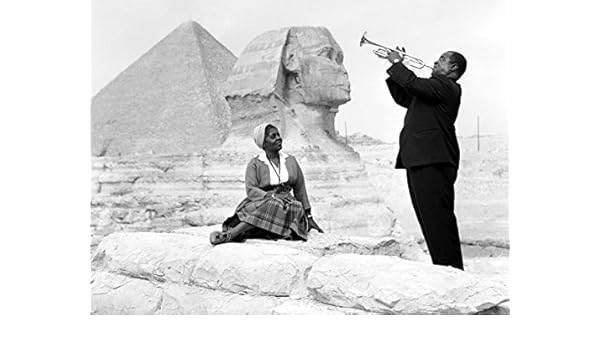
The album, which is pictured above, is 1964’s Jazz Impressions of Japan. This was the 3rd of 4 albums from the Quartet in the “Impressions” series. The others were, in order, “U.S.A.” (1957), “Euraisia” (1958), and “New York” (1964). At the time of the release of “Japan“, the Quartet was made up by Dave Brubeck on piano, Paul Desmond on alto sax, Joe Morello on drums, and Eugene Wright on bass. This was the most well-known iteration of the group, with Brubeck and Desmond being original members, and Morello and Wright joining in 1957 and 1959; respectively. The compositions and recordings were heavily influenced by their time spent in Japan as part of the US State Department’s Jazz Ambassadors program in the late 50’s/early 60’s. The program was intended to improve the image of the United States throughout the world during the Cold War. Other “ambassadors” included Louis Armstrong, Dizzy Gillespie, Benny Goodman, and Duke Ellington. Many would recognize the iconic photo of Satchmo playing in front of the Sphynx, which was taken during his 1961 tour of Africa as part of the program.

The album blends folk melodies of Japan, utilizes the Eastern scale, and borders on exotica at times; but it still retains the anti bebop/hard bop signatures of West Coast Jazz, which Brubeck was the poster child of (quite literally, appearing on the cover of Time in ‘1959). It was a true “East meets West”, in the most delightful of ways. From the opening of “Tokyo Traffic”, with Morello’s woodblock hits and gong-work, you feel as if you’ve warped from a university jazz hall to the center of a bustling Asian metro; if not with a hint of stereo-typed perceptions of what Asia was to Americans at the time. But as the song continues, you are brought right back to your western comforts, with Desmond smoothly interpolating “God Rest Ye Merry gentleman”. On the album goes, with only the tune “Zen is When” stepping slightly into a more “exotican” sound. The album is pure bliss to listen to, but as the VMP liner notes indicate, this album is a little under-loved. It was just one of over 2 dozen albums that would be released and tied to Brubeck’s name. It seems to have been lost a bit in the shuffle, even by Brubeck and the Quarter themselves, as only the final track – Koto Song – became a standard tune for the group in future performances and recordings.

The vinyl release this month became the first time the album was reissued on the format since 1980, and just the 3rd time being reissued since the original 1964 release. VMP had Ryan K. Smith cut the lacquers from first generation master tapes at Sterling Sound, and the album was pressed at QRP – all of which generally makes for a high-quality release. RKS is one of the better mastering engineers in the game, and QRP is far and away the best pressing plant going right now. The scans used for the album jacket actually appear to have printed artificial ring-wear (visible on the bottom-center part of the jacket), but the resolution is quite nice. The labels on the wax are the classic Columbia “2-eye”; noting “360 Sound”. The disc comes in QRP’s branded poly-inner sleeves and the vinyl appears to be thick; 180g weight. It’s a fairly premium-feeling package, which is very nice at the $23 price-point for an add-on subscription. As I sat down to give it a first listen, I took out the listening note (a very nice touch, I might add), and read a bit before dropping the needle.

The equipment I played the album on is as follows:

  • Turntable: Pro-Ject Debut Carbon w/ Acrylic Platter
  • Cartridge: Ortofon 2M Bronze, nude fine-line
  • Phonostage: Parasound PPH100
  • Receiver: Marantz SR7000 (using Direct mode for analog inputs)
  • Speakers: Klipsch KG4

As the needle dropped, surface noise was virtually non-existent. There was, however, some decently audible tape-hiss once the track began. This is one of the down sides to an analog format and analog source – you have degradation in source quality over time and if you do not bring digital elements into the process, you will replicate that degradation into your lacquer. It’s a trade off, and in this case I think it is worthwhile, because as the music started I was awed by the “realism” of the sound. Morello’s woodblocks sounded incredibly life like, and the gong’s ring was fully audible and un-distorted. I’ve long maintained that many percussion instruments, like a gong or any drumkit cymbal, are some of the most difficult instruments to completely and naturally replicate on a consumer-level media format. But when it is done right, the result is magical to hear, and it really completed the “in the room” feel of a well mastered record. The amount of detail on this album is quite impressive – it’s a testament to the record itself, but also to Smith’s mastering. There are multiple times when you can hear Wright’s bass strings being plucked, as well as an instance when you can hear wood creaking (I think it is from the bass, but it could also be the floor, or perhaps another instrument). Again, this all adds to the realism in sound. All in all, it is a wonderful representation of an underappreciated album by legendary musicians. The folks at Vinyl Me, Please hit a homerun with this release (and special shoutout to u/storfer, who I understand is the mastermind behind the Classics track).

Unfortunately, the VMP pressing of this has since sold out. But, if you are interested, I would highly recommend giving the album a listen on your streaming platform of choice. If you like it, you can generally find original pressings in decent condition for reasonable prices. It would be worth every penny, in my opinion!

Anyways, thanks for reading, I know this was a bit long winded but I wanted to share my thoughts because I was pretty stoked about this one! If you liked this write-up, check out some of my others:

De La Soul 3 Feet High and Rising | Father John Misty Pure Comedy | Grateful Dead American Beauty | Cab Calloway

Design a site like this with WordPress.com
Get started